
How to Choose the Right Electrical Cabinet for Your Needs
Choosing an electrical cabinet gets complicated when several options look suitable on paper. You need enough capacity for your loads, room for cables and maintenance, and protection that matches the installation site. A missed requirement can mean redesigning the panel or changing equipment later. This guide explains what to check before you order, so you can compare cabinet proposals against the needs of your project.
To choose the right electrical cabinet, define its function, confirm the electrical ratings, assess the installation environment, and check the proposed layout and cooling. Then verify the documents and supply scope for the complete configuration.
1. Start With the Job Your Cabinet Must Do
Write down what the cabinet needs to accomplish. Supplying several circuits, controlling a pump sequence, and switching a medium-voltage feeder require different equipment.
| What you need to do | Where to start | Information to prepare |
|---|---|---|
| Distribute power to multiple loads | Distribution cabinet | Incoming supply, outgoing circuits, load schedule and protection requirements |
| Start motors or adjust their speed | Motor control or VFD cabinet | Motor data, operating duty, starting method and speed-control requirements |
| Automate equipment or a process | PLC control cabinet | Equipment list, control sequence, I/O list and communication requirements |
| Switch and protect a medium-voltage circuit | Suitable medium-voltage switchgear | System voltage, circuit duty, fault conditions and protection requirements |
These functions can overlap. Your project may combine distribution and control in one assembly or use separate cabinets. Shengyu Hengda’s distribution cabinet, control cabinet and switchgear ranges provide starting points for those discussions.
Also clarify what you are buying: an empty enclosure, a cabinet with mounting accessories, or a wired electrical assembly. Evidence for an empty enclosure does not establish the performance of the completed panel.
2. Check Electrical Ratings Against Your Actual Loads
Prepare a load schedule before comparing cabinet sizes or prices. Include the equipment supplied by each circuit and identify which loads operate together.
Your specification should cover:
- Supply voltage, AC or DC, phase arrangement and frequency.
- Incoming and outgoing circuit requirements.
- Normal operating loads, motor starting conditions and operating duty.
- The earthing arrangement and required protective functions.
- Planned additional circuits and their expected loads.
Ask for the rated performance of the proposed assembly under your installation conditions. The rating of its largest circuit breaker does not, by itself, establish the current capacity of the whole cabinet. Component arrangement and temperature rise also matter.
For example, describe whether two pumps run together, alternate, or operate as duty and standby units. Include whether they need fixed-speed starting or variable-speed control. This gives your supplier a useful design brief; a request for a “pump cabinet” leaves those decisions unresolved.
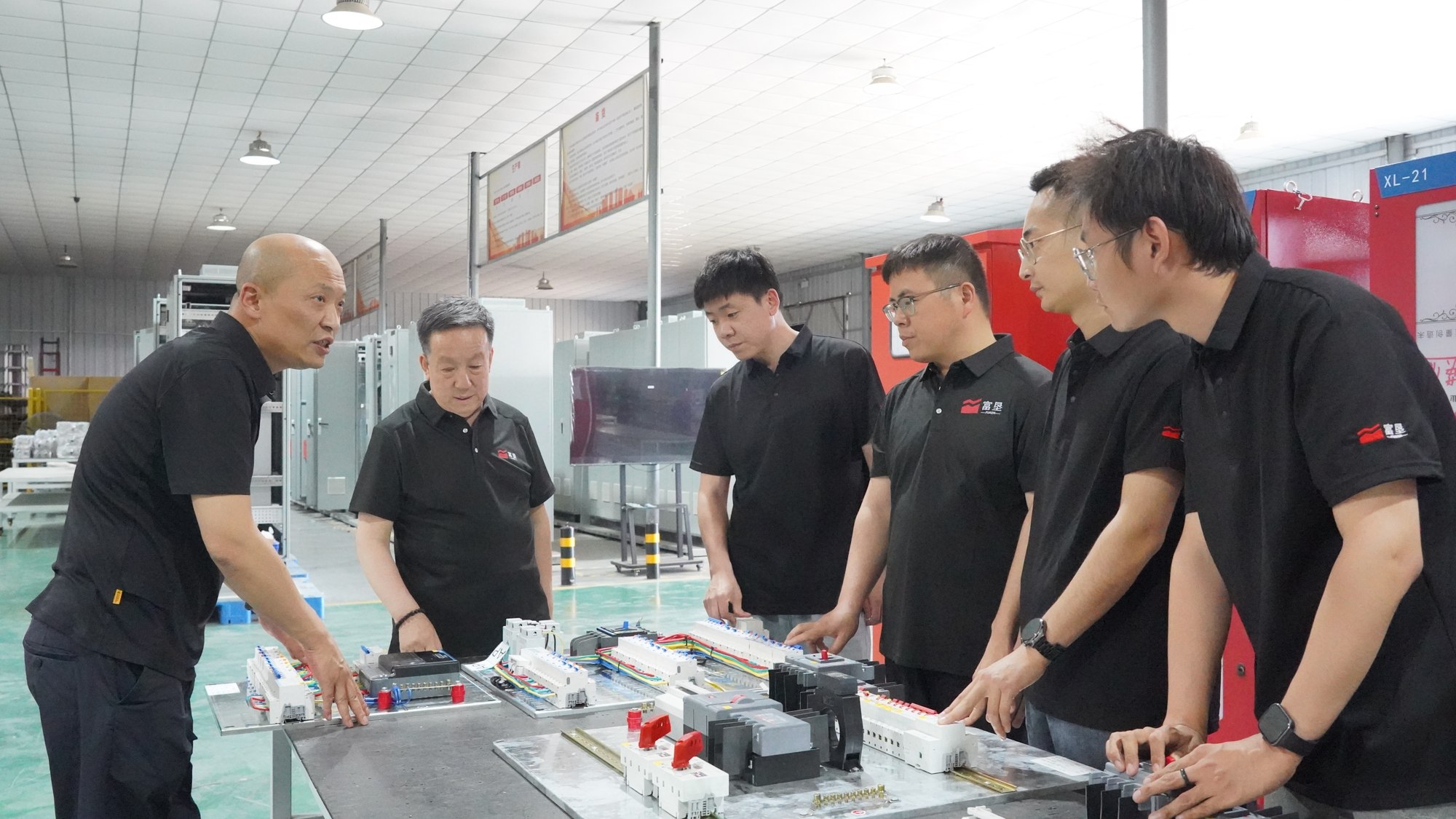
3. Confirm Short-Circuit Performance Separately
Normal load current and fault current are different requirements. A cabinet that can carry your operating load still needs suitable short-circuit performance at its installation point.
Obtain the prospective short-circuit current from your project electrical engineer or the relevant system study. Ask the supplier to confirm the assembly’s rating and any conditions attached to it, including specified upstream protection or fault duration.
Avoid comparing quotations by one isolated “kA” number. A circuit breaker’s breaking capacity and an assembly’s short-time withstand rating describe different capabilities. Your engineer needs to review the ratings and protective devices together.
4. Match the Enclosure to the Installation Environment
Describe the actual location. “Indoor” could mean a clean electrical room, a humid pump room or a workshop with airborne dust. “Outdoor” could mean a sheltered installation or direct exposure to sunlight and rain.
Record the conditions that affect the enclosure:
- Dust, water exposure and cleaning methods.
- Minimum and maximum ambient temperatures.
- Humidity and the possibility of condensation.
- Salt, chemicals or other corrosive substances.
- Sun exposure, impact risks and access by unauthorized people.
Choose the enclosure material and finish for those conditions. Coated steel may suit a dry indoor location. A wet or corrosive site requires a closer review of material grade, coatings, seals and chemical compatibility. Ask for a documented match to the environment rather than selecting by the word “stainless” alone.
Specify the required IP or enclosure Type rating clearly. IP and NEMA Type ratings use different tests and are not interchangeable. An IP rating alone also does not establish corrosion resistance or prevent internal condensation. Check the final arrangement with its cable entries, doors and cooling accessories.

5. Check Usable Space and Maintenance Access
Ask to review a layout drawing before approving the cabinet dimensions. External height, width and depth do not show how much space remains after mounting hardware, cable ducts and door-mounted devices are installed.
Check that the layout allows for:
- The mounting orientation and clearances specified for each component.
- Cable terminations, cable bending and entry locations.
- Access to terminals and replaceable parts.
- Space behind door-mounted displays and controls.
- Planned additional equipment and its wiring.
Use component installation instructions to determine clearances. For example, ABB specifies spacing and installation conditions for its PLC equipment; those product requirements should be checked during layout design.
Then check the installation space outside the cabinet. Confirm delivery access, mounting support, door opening and the required service area. If the cabinet must stand against a wall, flag that early so the proposal can provide the appropriate cable and maintenance access.
6. Plan Heat Removal Before Finalizing the Layout
Provide the component heat losses, expected operating duty and maximum site temperature. For an exposed outdoor cabinet, include solar heating in the assessment.
The cooling arrangement should follow the heat load and site conditions:
| Approach to assess | Main question |
|---|---|
| Heat dissipation through the enclosure | Can the enclosure keep all components within their temperature limits? |
| Filtered ventilation | Is the surrounding air sufficiently clean and cooler than the permitted internal temperature? |
| An enclosure cooling unit | Is active cooling needed, and is its capacity suitable at the actual operating temperatures? |
| An air-to-water heat exchanger | Is suitable cooling water available, and does the arrangement meet the project’s requirements? |
Keep air paths clear in the proposed layout. Also assess condensation control where humidity and temperature changes create a risk. Cooling capacity, airflow and moisture control need to work together.
Avoid approving the cabinet size first and leaving the cooling decision until production. Cooling equipment can change the space, access and enclosure requirements.

7. Compare Complete Proposals Before You Order
Send each supplier the same requirements so you can compare equivalent configurations. Include your drawings, load schedule, site conditions, available space and required delivery scope.
Ask the proposal to identify:
- The cabinet arrangement and component list.
- Electrical ratings and the conditions under which they apply.
- Protection, metering and control functions.
- Enclosure material, environmental rating and cooling arrangement.
- Drawings, verification evidence and inspection records to be supplied.
- Whether PLC programming, HMI development, testing and commissioning are included.
The applicable standards depend on the equipment. IEC 61439-2 addresses low-voltage power switchgear and controlgear assemblies, while IEC 62271-200 addresses specified AC metal-enclosed switchgear above 1 kV and up to and including 52 kV. Confirm the relevant standards for your particular assembly and destination.
A useful quotation makes assumptions visible. If fault information, control logic or site details are missing, ask the supplier to list what remains provisional before you approve production.
Frequently Asked Questions
Is a cabinet marked 400 V and 630 A enough information to place an order?
No. Those two ratings leave several selection questions unanswered. You still need to confirm the outgoing circuits, short-circuit performance, protection arrangement, installation conditions and required functions. Ask whether the stated current applies to the complete proposed assembly under your operating conditions. Use your load schedule and single-line diagram to identify any missing requirements before approving the quotation.
Can I add a VFD later if the cabinet has spare space?
Spare space is only one requirement. A VFD addition can change heat losses, cable routing, electromagnetic compatibility and circuit protection. Have the panel designer assess the specific drive, motor and operating duty before treating the existing cabinet as suitable. If an upgrade is likely, include it in the original design brief so the layout and electrical capacity can be reviewed together.
Can I use an IP65 cabinet outdoors without further checks?
An IP65 marking alone does not confirm suitability for your outdoor location. You also need to assess sunlight, ambient temperature, corrosion, condensation and the installed accessories. Ask the manufacturer to confirm outdoor use for the complete configuration, including cable entries and cooling equipment. A sheltered position may reduce exposure, but it does not replace checking the cabinet’s specified operating conditions.
Can a ventilation fan keep the cabinet cooler than the surrounding air?
A ventilation fan using ambient air cannot cool the cabinet below that air’s temperature. It removes heat by exchanging warmer internal air with cooler external air. If your required cabinet temperature is below the ambient temperature, ask for an appropriately sized cooling solution. Also check air cleanliness, filter maintenance and the protection rating of the installed ventilation arrangement.
Can I request a quotation before I have a finished electrical drawing?
Yes. You can begin with a functional description, equipment list, supply details and installation conditions. For a control cabinet, explain the operating sequence and identify any required signals or communications. Ask the supplier to state the assumptions behind an initial proposal. Resolve missing technical inputs and approve the agreed drawings and scope before releasing the cabinet for manufacture.
Does a PLC control cabinet quotation normally include programming and commissioning?
You should confirm both explicitly. A quotation may cover the cabinet hardware and internal wiring while excluding software development or site work. List the required control sequence, HMI screens, communications, testing and commissioning responsibilities in your enquiry. Ask the supplier to show these items separately, including the agreed software handover, so you can compare proposals on the same basis.
Final Thoughts
Choose your electrical cabinet around its function, load requirements and installation conditions. Review the complete configuration, including protection, layout, cooling and documentation, before approving an order. Shengyu Hengda supplies distribution cabinets, control cabinets and switchgear for project requirements. Share your drawings, load schedule and site conditions so the team can review a suitable configuration and clarify the scope of your quotation.